
Buyer's Guide: Best Places to Live in Denver CO for 2026
Why Finding the Right Denver Neighborhood Matters

Best places to live denver co vary widely depending on what matters most to you—walkability and urban energy, or space and top-rated schools. Here's what you need to know:
Top Denver Neighborhoods for Urban Living:
- Capitol Hill – Historic, walkable, affordable ($384K median)
- Five Points/RiNo – Arts, music, cultural history ($556K median)
- Highland (LoHi) – Trendy, mixed architecture ($538K median)
- Washington Park – Green space, family-friendly ($817K median)
Best Denver Suburbs for Space & Community:
- Littleton – Historic charm, parks, A-rated schools ($617K median)
- Centennial – Safe, family-focused, near DTC (A+ schools)
- Arvada – Walkable downtown, commuter rail access ($642K median)
- Aurora – Diverse, affordable, growing ($463K median)
Denver draws people from across the country for good reason. The sunshine, the mountains, the job market, the craft beer scene—it's all real. But once you decide to move here (or stay here), the next question is where to actually live.
Do you want a bungalow on a tree-lined street where you can walk to coffee shops and farmers markets? Or a newer build in a quiet suburb with great schools and a big backyard? Maybe you're single and want nightlife at your doorstep. Maybe you're a family looking for safe streets and strong community connections.
Denver's housing market is competitive. Homes move fast, and neighborhoods vary dramatically in price, vibe, and amenities. Understanding what each area offers—and what trade-offs you're making—helps you avoid buyer's remorse and find a place that truly fits how you live.
I'm Heidi Cox, and my team and I have helped hundreds of buyers steer the best places to live denver co by matching their lifestyle priorities to the right neighborhood, whether that's Capitol Hill's historic charm or Centennial's family-friendly suburbs. We're here to make the process clear, not overwhelming.
How to Choose Your Perfect Denver Spot: City vs. Suburb
Deciding where to settle in the Denver Metro area often comes down to a fundamental choice: city living or suburban tranquility. Both offer unique benefits, and the "best" choice truly depends on your individual lifestyle, priorities, and long-term goals. We help buyers steer this every day, understanding that a home is more than just a house; it's the foundation for your life.
Many homebuyers are increasingly choosing Denver's suburbs, and for good reason. Suburbs often promise larger home lots, quieter streets, and a generally more family-friendly atmosphere. If top-rated schools, abundant recreational spaces, and a strong sense of community are high on your list, then areas just outside the city center might be a perfect fit. They often provide more affordable options compared to downtown Denver, along with newer developments featuring modern amenities and diverse home styles that cater to growing families or those seeking more space.
On the other hand, city living offers an undeniable energy and convenience. For those who thrive on walkability, immediate access to vibrant culture, diverse dining, and a shorter commute to urban job centers, Denver's core neighborhoods are incredibly appealing. Denver has been recognized as a top city for jobs, young professionals, and singles, which naturally draws many to the heart of the city. The arts and culture scene, incredible restaurants, and stunning natural beauty are all easily accessible when you're in the thick of it.
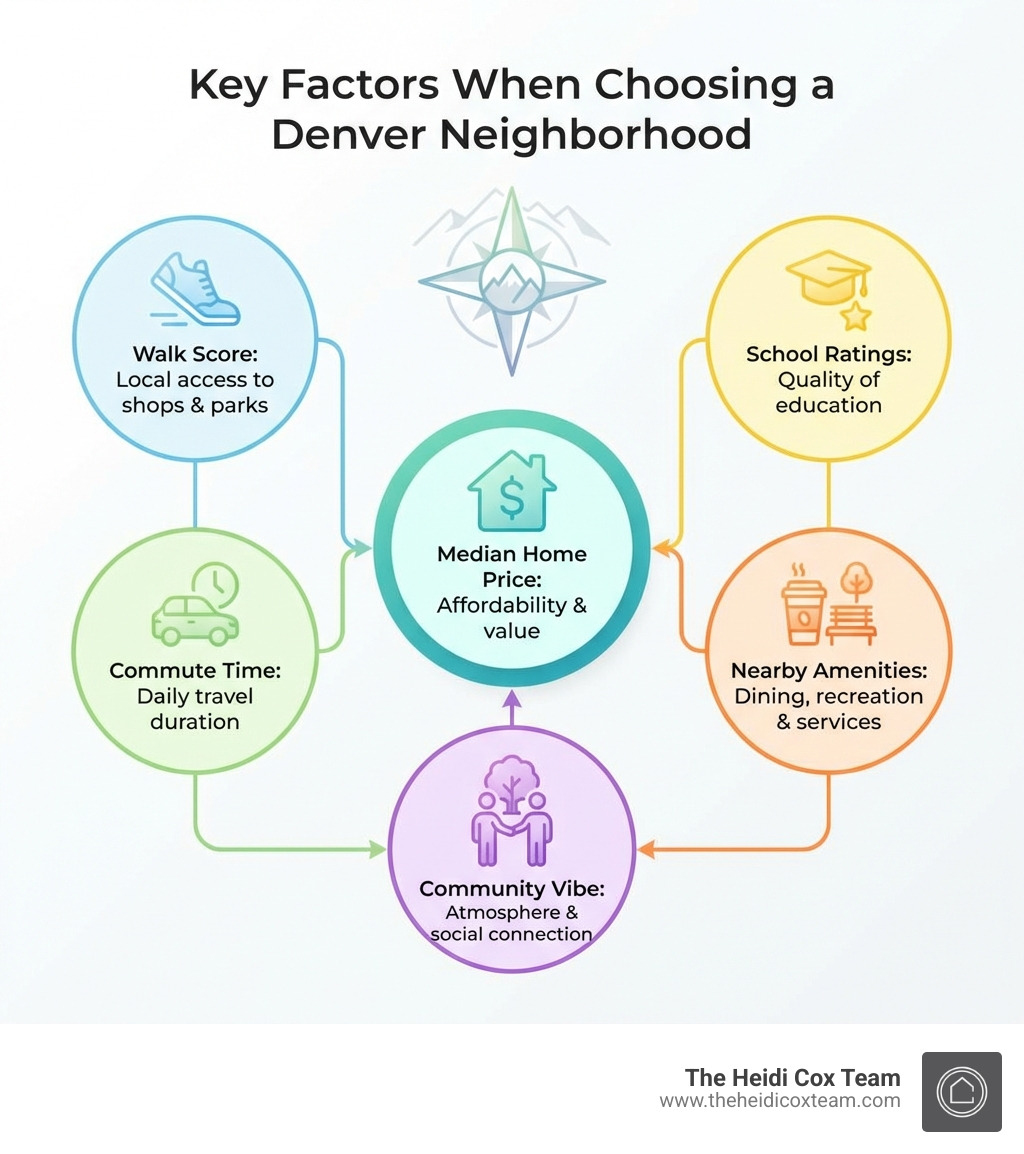
When we work with clients, we emphasize evaluating key factors to determine the ideal location. These include:
- Safety: Understanding local crime rates gives you peace of mind.
- Education: Access to highly-rated public and private schools is crucial for families.
- Amenities and Recreation: Proximity to shopping, parks, healthcare, and entertainment is essential for daily living and enjoyment.
- Commute Times: Efficient transportation links to work or other important destinations can significantly impact your quality of life.
- Community Feel: Whether you prefer a tight-knit neighborhood with local events or a more independent vibe, finding the right community connection matters.
We believe that understanding these elements is vital to making a confident decision. If you'd like to dive deeper into our approach to finding your ideal neighborhood, you can find more information on our Denver Real Estate Blog.
Top Denver Neighborhoods for Urban Living
For those who love the pulse of the city, Denver offers a variety of neighborhoods that blend historic charm with modern amenities, all within easy reach of downtown. These areas are perfect for embracing an eclectic, walkable lifestyle with endless dining, entertainment, and cultural opportunities.
Capitol Hill: Historic, Walkable, and Affordable

Capitol Hill is one of Denver’s oldest and most distinctive neighborhoods, rich with history and character. As you walk its streets, you can truly see how history unfolded, from the large Victorian-era mansions on "Millionaire's Row" to the gothic-style churches and small stone buildings. The architecture here is truly eclectic, including the iconic golden-domed Colorado State Capitol.
What makes Capitol Hill particularly attractive is its balance of urban living with relative affordability, especially for renters. Studio apartments here can range from $805-$1,400, and the median home price is around $384,269, with a median rent price of $1,267. This makes it a compelling option for those seeking a big-city environment without the highest price tags. The median age here is 34, reflecting a vibrant mix of residents.
Capitol Hill is also remarkably walkable—it's the second-most walkable neighborhood in Denver. This means daily errands, enjoying local restaurants, and exploring cultural attractions are often just a short stroll away.
Things to do in Capitol Hill:
- Immerse yourself in art and history at the Denver Art Museum, the History Colorado Center, or the Molly Brown House Museum.
- Catch a live show at The Ogden Theatre.
- Enjoy diverse culinary experiences at restaurants like Potager, City, O’ City, or Jelly Cafe.
- Grab drinks at Bar Nun Denver or Bang Up To The Elephant!.
- Visit the majestic Cathedral Basilica of the Immaculate Conception.
Capitol Hill’s blend of history, culture, and affordability makes it a great option, particularly for first-time homebuyers and young professionals looking to be close to the action.
Five Points & RiNo: A Hub of History and Creativity
Five Points holds a unique and significant place in Denver's history. Once known as the "Harlem of the West," it was a thriving cultural center that hosted legendary jazz artists like Billie Holiday and Miles Davis. This rich legacy continues to fuel its vibrant arts and music scene today.
Within Five Points, the River North Art District, affectionately known as RiNo, has become a dynamic hub for creativity. Here, you'll find an explosion of colorful street murals, numerous local galleries, and art studios. RiNo is also home to exciting music venues like The Roxy Denver and hosts annual events such as the Five Points Jazz Festival. For live music lovers, Cervantes’ Masterpiece Ballroom is a local gem, featuring indie, hip-hop, and bluegrass acts.
Five Points is a highly walkable area, making it easy to explore its artistic offerings, diverse eateries, and unique shops. The median home price in Five Points is $555,882, with a median rent price of $1,463, and a median age of 33. The median household income is $88,369. This neighborhood offers a dynamic and engaging urban experience.
For those interested in the deep historical roots and evolving cultural landscape of this part of Denver, we encourage you to learn more about historic Curtis Park, an adjacent neighborhood that shares many of these defining characteristics.
Highland (LoHi): A Blend of Old and New
The Highland neighborhood, often referred to by its distinct sub-areas like LoHi (Lower Highland) and Highland Square, beautifully blends Denver's past with its present. Here, you'll find charming Queen Anne, Craftsman, and cottage-style homes standing alongside sleek modern apartments and vibrant street murals. This eclectic aesthetic is part of its unique appeal.
Highland is particularly popular with young professionals and singles drawn to its trendy atmosphere, unique shops, and diverse culinary scene. The median home price in Highland is $538,020, with a median rent price of $1,731, and a median age of 34.1. The median household income is $89,050.
The neighborhood boasts a fantastic array of restaurants and bars, from farm-to-table dining at Root Down to craft cocktails at Williams & Graham. No visit is complete without a stop at Little Man Ice Cream, a local favorite known for its iconic milk can-shaped building.
Another key feature is the Highland Pedestrian Bridge, which offers stunning views of downtown Denver and provides easy access to the city center. This connectivity, combined with its unique character, makes Highland an appealing choice for those seeking a vibrant, modern urban experience rooted in historic charm.
Washington Park: Green Space and Laid-Back Living
If you're looking for an urban neighborhood that offers a balanced lifestyle with ample green space, "Wash Park" is often at the top of the list. Denver’s Washington Park is celebrated for its low crime rates and laid-back vibe, making it a fantastic neighborhood for both families and singles.
The centerpiece of this community is the expansive 165-acre Washington Park itself. Here, you can stroll through a replica of George Washington’s Mount Vernon gardens, play basketball, or join one of the many fun runs and events. The Cherry Creek Trail also borders the neighborhood, offering additional opportunities for hiking, biking, and enjoying the outdoors.
Housing in Washington Park includes cozy bungalows, neat Neoclassical houses, and modern Denver homes, all nestled along tree-lined residential streets. While the median home price is higher at $816,840, with a median rent price of $2,092, the lifestyle benefits are significant. The median age is 46.2, and the median household income is $165,855, indicating a well-established and affluent community. It's considered safer than 77% of Denver neighborhoods.
Beyond the park, residents enjoy charming shopping districts like Historic South Gaylord Street and South Pearl Street, which hosts popular events like Oktoberfest and a vibrant Farmers Market. Dining options abound, from the classic Wash Park Grille to casual spots like Campus Lounge and delectable treats at Devil’s Food Bakery and Bonnie Brae Ice Cream. Washington Park truly offers a blend of urban amenities with a serene, community-focused atmosphere.
The Best Denver Suburbs for Space and Community
Sometimes, the ideal lifestyle calls for a bit more space, a quieter pace, and a strong community feel without sacrificing access to Denver’s amenities. Our team understands that for many, finding a home in the Denver Metro area means exploring the vibrant suburbs that offer excellent schools, abundant recreation, and a welcoming atmosphere.
Littleton: One of the best places to live in Denver CO for historic charm
Littleton seamlessly blends its rich history with contemporary living, making it a highly desirable suburb. Its historic downtown Main Street, added to the National Register of Historic Places in 1998, is a true gem. Lined with charming locally owned restaurants like Cencalli Taqueria and Grande Station Scratch Kitchen, and unique shops like True Find Boutique and Willow and Tulaire, it provides a soulful antidote to typical chain-store offerings. The Town Hall Arts Center also adds to the cultural fabric.
Outdoor recreation is a huge draw in Littleton. The city boasts over 1,400 acres of parks and open space, along with more than 200 miles of trails, offering endless opportunities for hiking, biking, and enjoying Colorado's natural beauty. It's also just about 20 minutes from the majestic Rocky Mountains.
Littleton is known for its strong sense of community, including its unique dog-friendly culture—residents even elect an honorary dog mayor! You’ll find pup-friendly breweries like Coal Mine Ave Brewing Company, which even has a dog park.
With a median sale price of $617,000, a median sale price per square foot of $280, and homes spending a median of 23 days on the market, Littleton offers a robust housing market. Its public schools are highly rated (A), and the median household income is $96,611, making it an excellent choice for families and those seeking a blend of historic charm and modern conveniences.
Centennial: Suburban Tranquility with Urban Access
Centennial stands out as a superb option for those seeking suburban tranquility coupled with convenient access to urban centers. This community consistently receives high marks, including an A+ Overall Niche Grade and an A+ for Public Schools, underscoring its commitment to quality education and family-friendly living.
What makes Centennial particularly appealing is its strategic location. It offers excellent access to the Denver Tech Center (DTC), a major employment hub, making commutes manageable for many professionals. Additionally, its proximity to Denver International Airport (DIA) and downtown Denver ensures that residents can easily reach city amenities or travel without extensive hassle.
Centennial is celebrated for its safety, often noted for its low crime rates, which contribute to its peaceful atmosphere. The city’s well-maintained parks and recreational facilities, along with its overall community focus, make it an ideal place for families to grow and thrive. With a population of 107,386 and a median household income of $107,386, Centennial provides a stable and welcoming environment for a diverse range of residents.
Arvada: A Thriving Downtown and Classic Feel
Arvada offers a classic suburban feel with the added benefit of a revitalized, thriving downtown. Its historic Olde Town Arvada is a testament to its charm, with sections of Olde Wadsworth Boulevard and Grandview Avenue closed to car traffic, making it safer and more pleasant for pedestrians to stroll and enjoy the shops and restaurants. You can find unique spots like Baja-inspired Mexican restaurant Lady Nomada and artisan jeweler Balefire Goods.
This suburb is also well-connected, with easy access to both Boulder and Denver via the G-Line commuter rail, which debuted in 2019. This makes Arvada an attractive option for those who commute but prefer a quieter residential setting.
Arvada boasts a strong cycling culture, with approximately seven miles of the Arvada Bike Loop for enthusiasts. For broader recreation, the Apex Center provides extensive facilities.
The housing market in Arvada is active, with a median sale price of $642,000, a median sale price per square foot of $283, and homes typically spending 22 days on the market. Public schools are highly rated with an A- grade, and the median household income is $113,396. Arvada's blend of historic charm, modern conveniences, and accessibility makes it a strong contender for those looking for the best places to live denver co outside the immediate city.
Aurora: A Diverse and Growing Community
Aurora stands out as one of the most diverse and rapidly growing communities in the Denver Metro area. Its vast footprint of 164 square miles provides ample room for a wide variety of housing options and amenities.
One of Aurora's most vibrant features is its incredible diversity, which is particularly evident in its global food scene. Along a four-plus-mile stretch of Havana Street, you can find a remarkable array of international markets and over 250 ethnic eateries. From savory broths at Seoul Korean BBQ & Hot Pot to build-your-own Vietnamese spring rolls at Dân Dã, and authentic dishes at Nile Ethiopian Restaurant, Aurora offers a culinary journey around the world. The Mango House is another testament to its rich cultural mix.
Housing options in Aurora are diverse and generally more affordable than in central Denver. You can find everything from modern townhomes to spacious single-family homes, with new developments like Aurora Highlands, Painted Prairie, and Southshore continually adding to the inventory. The median sale price in Aurora is $463,000, with a median sale price per square foot of $226, and homes spending a median of 46 days on the market. Public schools receive a B rating, and the median household income is $84,320.
Aurora also offers abundant outdoor amenities, including 103 parks and over 5,000 acres of open space and trails. Golf enthusiasts will appreciate its five municipal courses, with Murphy Creek being a crown jewel, modeled after traditional links layouts in Scotland. This combination of diversity, affordability, and extensive amenities makes Aurora a compelling choice for many homebuyers.
Finding the Best Places to Live in Denver CO: A Quick-Glance Comparison
To help you visualize how these neighborhoods and suburbs stack up, we’ve put together a quick comparison table. These are median figures and general descriptions; your ideal fit will depend on your specific needs and preferences.
| Neighborhood/Suburb | Median Home Price | Vibe | Walk Score (General) | Great For | School Rating (General) |
|---|---|---|---|---|---|
| Capitol Hill | $384,269 | Urban, Historic, Eclectic | Very High | Young Professionals, Singles, Arts & Culture Lovers | B |
| Washington Park | $816,840 | Urban, Green, Laid-back | High | Families, Outdoor Enthusiasts, Established Professionals | B |
| Littleton | $617,000 | Suburban, Historic, Community-focused | Medium | Families, Outdoor Lovers, Small-town Charm Seekers | A |
| Centennial | N/A (Suburban) | Suburban, Tranquil, Family-focused | Low | Families, Commuters (DTC), Safety-Conscious | A+ |
| Arvada | $642,000 | Suburban, Historic Downtown, Active | Medium | Families, Commuters (G-Line), Cyclists | A- |
| Aurora | $463,000 | Suburban, Diverse, Growing | Low | Families, Budget-conscious, Foodies, Golfers | B |
Note: Walk Score is a general indicator; specific blocks or areas within these locations may vary.
Conclusion: Finding the Right Denver Home for Your Life
Choosing the best places to live denver co is a deeply personal journey, and there’s no single right answer for everyone. As we've explored, Denver and its surrounding suburbs offer an incredible spectrum of lifestyles, from the busy, historic streets of Capitol Hill to the tranquil, family-friendly expanse of Centennial. It's truly about matching a location to your unique lifestyle—whether that means a vibrant arts scene, top-tier schools, a quick commute, or simply more room to breathe.
We believe that a home is the foundation for a beautiful, grounded life, and finding the right community is paramount. Denver truly offers a fit for everyone, whether you dream of an urban condo that puts nightlife at your doorstep or a suburban home with a spacious yard for your family.
Our team is here to help you steer these options with confidence and care. With our deep local expertise, especially in areas like Park Hill and East Denver, we focus on understanding what truly matters to you—walkability, schools, community, and how your home supports your daily living and long-term wealth. We blend financial clarity, strategic negotiation, and a design eye to ensure you make confident decisions.
You don't need to have it all figured out to get started. We're relationship-driven, not transaction-focused, and our goal is to be your trusted guide through this exciting transition. To learn more about The Heidi Cox Team and how we can support you, please reach out. We're ready to help you start your Denver home buying process with us.