
How to Downsize in Denver Without Feeling Rushed

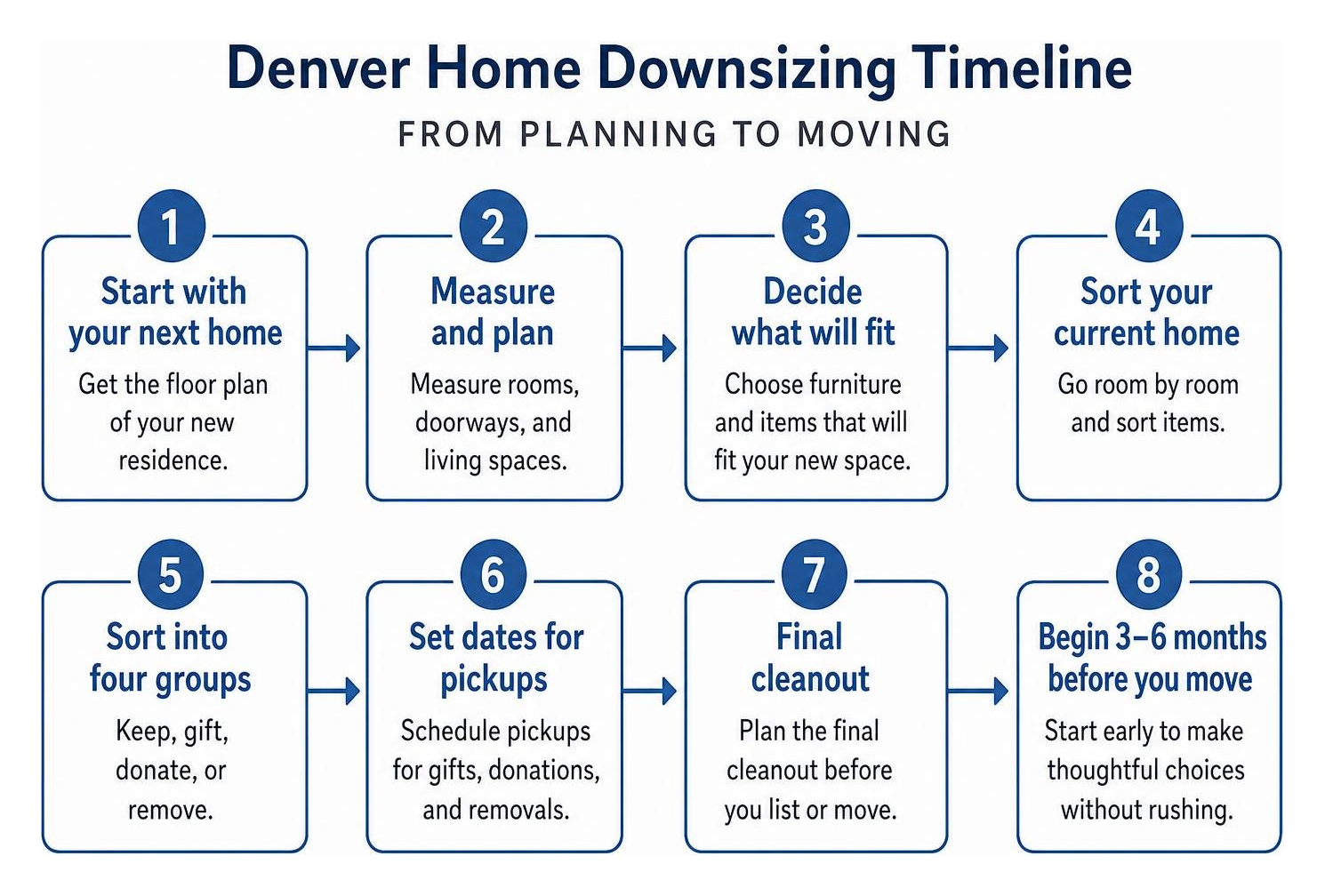
To downsize in Denver, start with the home you’re moving into. Measure its rooms and doorways, then decide what will fit. Sort your current home room by room into items to keep, gift, donate, or remove. Set dates for pickups and the final cleanout before you put your home on the market. If you can, begin three to six months before the move so you have time to make thoughtful choices.
I’m Heidi Cox, and I help Denver Metro buyers and sellers plan how to downsize Denver homes with their daily needs and long-term goals in mind. Let’s walk through the steps, starting with the space you’ll need next.
The Step-by-Step Blueprint on How to Downsize in Denver
Moving from a large family home in Park Hill, Hilltop, or Country Club to a lower-maintenance space is about more than just moving boxes. It is a transition toward a simpler lifestyle, lower utility bills, and less weekend maintenance. Whether you are transitioning to a lock-and-leave property or helping aging parents downsize in Denver, having a structured roadmap keeps the process calm and organized.
Step 1: Early Planning on How to Downsize Denver Homes
The ideal timeline for downsizing is three to six months before you intend to list your home or move. Starting early gives you space to make decisions without the pressure of an impending closing date.
Begin by securing the floor plan of your new residence. If you are downsizing to a condo in Cherry Creek or a brownstone in Curtis Park, measure the primary living spaces, bedroom dimensions, and doorway clearances. A king-sized bedroom set or an expansive ten-person dining table from a 3,500-square-foot home in Belcaro may not comfortably fit a 1,200-square-foot single-level layout. Knowing your exact space constraints allows you to choose what furniture to keep before you pack a single box.
Step 2: Sorting Room by Room with the Four-Box Method
Tackling an entire home at once can quickly lead to decision fatigue. Instead, focus on one room at a time, starting with low-emotional-stakes areas like the laundry room, guest bathroom, or pantry.
Use the classic Four-Category System for every item in each room:
- Keep: Items that serve a daily practical purpose or carry deep meaning, sized appropriately for your new floor plan.
- Gift: Family heirlooms or personal pieces promised to children, siblings, or friends. Establish a clear date for loved ones to collect these items.
- Donate: Functional furniture, small kitchen appliances, books, and clothing that can benefit local community organizations.
- Remove: Broken goods, worn-out linens, expired items, and general clutter ready for recycling or responsible disposal.
For items that hold sentimental value but cannot fit into your new space, consider digital archiving. Taking high-resolution photographs of children's artwork, vintage collections, or oversized heirlooms lets you keep the memory without occupying physical square footage.
Step 3: Managing Valuables, Antiques, and Important Documents
Before opening your doors to donation pickups or cleanout teams, secure all essential personal records and family valuables.
- Important Documents: Gather vital records including wills, trusts, deeds, medical files, birth certificates, and passports into a single, secure lockbox that you move personally. Digitize older paper records where practical.
- Fine Jewelry and Antiques: Separate fine jewelry, coin collections, fine art, and rare collectibles. If you have significant antique collections, bring in a certified appraiser.
- Estate Sales: If you have an entire household of high-quality furnishings, art, and decor to liquidate, an estate sale company can manage the pricing, staging, and sale. Estate companies typically work on a commission of 30% to 40% of gross proceeds, handling the entire liquidation so you do not have to negotiate with individual buyers.
- Medications and Hazardous Materials: Safely drop off expired or unneeded medications at local Denver police precinct dropboxes or participating community pharmacies. Ensure paint cans, lawn chemicals, and automotive fluids are set aside for local household hazardous waste recycling.
Step 4: Coordinating Local Denver Donations and Eco-Friendly Removal
Once you have identified your donation items, take advantage of Denver organizations that provide pickup services for bulky goods.
Organizations like ARC Thrift Stores, Habitat for Humanity ReStore, the Denver Rescue Mission, and The Salvation Army offer community drop-offs and scheduled pickups for qualifying furniture, clean home goods, and building supplies. Reviewing a detailed Denver downsizing guide for seniors can help clarify which local donation partners accept specific types of furniture and home goods.
For items that cannot be donated, eco-friendly hauling teams prioritize diversion from local landfills by sorting items for metal recycling, electronic waste processing, and secondary material reuse.
Downsizing Services, Cleanouts, and Move Management Costs
You do not have to tackle the physical and logistical demands of downsizing alone. I have a strong network of professional organizers, move managers, and cleanout specialists who help coordinate the transition.

A Senior Move Manager coordinates everything from floor planning and sorting to hiring movers, supervising packing, and unpacking your new kitchen on move day. For older adults exploring options like Denver senior living communities in areas such as Central Park, Washington Park, or the Denver Tech Center, these specialists provide steady guidance.
While a standard move management project spans 4 to 8 weeks, experienced teams can compress urgent moves—such as a direct transition from a hospital discharge into assisted living—into 1 to 2 weeks when necessary.
Cost Breakdown of Professional Downsizing in Denver
Downsizing costs vary based on the square footage of your home, the volume of possessions, and the level of hands-on support you need.
Professional organizers in the Denver Metro area generally charge between $50 and $130 per hour, with project averages running around $75 to $150 per session depending on the team size. Cleanout and hauling services depend on the volume of space your items fill in a truck:
| Project Scope | Typical Denver Price Range | What Is Included |
|---|---|---|
| Small Cleanout | $99 – $149 | A few bulky items, several boxes, or a single closet purge |
| Multi-Room Cleanout | $249 – $399 | Furniture and household items across 2 to 3 rooms |
| Full House Cleanout | $399 – $650+ | Complete baseline cleanout of living spaces in an average home |
| Large Estate Cleanout | $650 – $1,200+ | Full home including garage, basement, attic, and outdoor items |
| Professional Organizer | $50 – $130 / hour | Hands-on sorting, labeling, space planning, and donation drop-offs |
| Estate Sale Service | 30% – 40% commission | Complete inventorying, pricing, marketing, and on-site sale management |
The Storage Unit Trap: Renting a temporary storage unit during a downsize often turns into a long-term expense. In the Denver area, a standard storage unit averages around $150 per month, totaling $1,800 a year for items that are rarely accessed. Whenever possible, make firm decisions during the sorting phase rather than postponing them with storage fees.
How to Downsize in Denver for Senior Living and Assisted Care
Downsizing into assisted living or memory care requires a thoughtful approach centered on safety, ease of movement, and familiarity.
When preparing an assisted living floor plan, prioritize clear walking paths that accommodate walkers or mobility aids. Choose a comfortable, familiar armchair, a simplified wardrobe of favorite clothing, and cherished framed family photos placed at eye level. Setting up the new space before move day—with the bed made and familiar art on the walls—helps the new environment feel like home immediately.
Preparing Your Denver Property for Sale After Downsizing
Once the personal sorting and cleanouts are complete, you can focus on preparing your property for the market. Clearing decades of accumulated belongings reveals the architectural charm of homes in neighborhoods like City Park West, Cheesman Park, or Congress Park.

A thoroughly cleared and decluttered home lets prospective buyers focus on room proportions, natural light, and architectural details. Denver market data consistently shows that staged and decluttered homes sell for 5% to 10% more than properties crowded with personal belongings. Reviewing our Denver home staging costs guide can give you a clear picture of how staging investments compare to final sale outcomes.
Staging Strategies to Maximize Resale Value
Staging does not necessarily require renting an entire truckload of brand-new furniture. Often, the most effective approach combines strategic editing with light cosmetic refreshes:
- Neutralizing Spaces: Applying a fresh coat of warm, neutral paint brightens living rooms and hallways while creating a clean canvas for buyers.
- Editing Furniture: Removing extra side tables, oversized bookcases, and heavy drapery makes rooms feel larger and improves overall flow.
- Boosting Curb Appeal: Tidy up the front entryway, add fresh mulch, trim shrubs, and ensure exterior lighting is clean and welcoming.
- Highlighting Key Features: Keep kitchen countertops and bathroom vanities bare, save for one or two simple, tasteful decor accents.
For practical room-by-room preparation techniques, explore our favorite home staging tips for Denver. If you are curious about how your property currently compares to recent neighborhood sales, you can check what your home is worth to help inform your timing and budget.
Navigating the Selling Process with Confidence
Selling a long-time home comes with specific logistical steps. From timing the listing around seasonal market patterns to coordinating Denver municipal requirements and reviewing inspection items, having clear guidance keeps the experience predictable.
Understanding the full Denver home selling process helps you plan each milestone with confidence. You can also explore practical tips for selling your home in Denver to ensure your home shows at its best from the first weekend of open houses through to closing.
Frequently Asked Questions About Downsizing in Denver
How long does the average downsizing project take in Denver?
Most complete downsizing projects take between 4 and 8 weeks from the first sorting session to the moving day. Starting 3 to 6 months in advance allows for an unhurried, comfortable pace. If an unexpected life transition or health change requires a fast move, professional move managers can compress the process into 1 to 2 weeks.
How do I handle sentimental items that family members don't want?
It is common for adult children or relatives to decline large dining sets, antique china, or heavy furniture. Instead of holding onto items out of obligation, offer smaller keepsake pieces, create digital photo books of family heirlooms, or sell remaining items through a reputable estate sale so another household can appreciate them.
What are the biggest mistakes to avoid when downsizing?
The most frequent missteps include:
- Relying on a long-term storage unit instead of making final decisions.
- Sorting without measuring the room dimensions and doorways of the new home.
- Waiting too long for distant family members to claim items without setting a firm deadline.
- Trying to complete an entire multi-story house cleanout alone in a single weekend.
Conclusion
Downsizing is an opportunity to shed maintenance responsibilities, reduce daily stress, and create a living environment designed for your next chapter. Whether you are moving to a sunny condo in Cherry Creek, a low-maintenance home in Southmoor Park, or a walkable neighborhood in Central Park, thoughtful planning makes all the difference.

When you are ready to explore your options and navigate your next move, work with The Heidi Cox Team to get the process started. You can also explore our approach to selling your Denver home to see how we guide you through every stage with care, clarity, and deep local expertise.