
How to Sell a House: Start With a Clear Plan

There is a significant difference between listing a home and strategically selling one.
Anyone can put a house on the MLS. But understanding what makes a home valuable, knowing where to invest before bringing it to market, creating an emotional connection with buyers and negotiating to protect your financial interests require an entirely different level of expertise.
I'm Heidi Cox, a Denver REALTOR® with milehimodern. I've been selling real estate since 2013, specializing in historic and architecturally distinctive homes throughout Denver.
I believe real estate sits at the intersection of design, financial strategy and the lives we are building. And when it comes to selling your home, all three deserve careful consideration.
If you're selling a historic Tudor in Park Hill, a restored Victorian in Curtis Park or a mid-century modern home anywhere in Denver, here's how I approach getting your home ready to sell.
Step 1: Before We Talk About Selling Your Home, Let's Talk About Your Life
One of the first questions I ask my sellers has nothing to do with their house.
What are you trying to accomplish?
Are you moving into a larger home? Simplifying your life? Navigating a divorce? Relocating? Ready to use the equity you've spent years building?
Your answer shapes everything about our strategy.
I want to understand not only what your home is worth, but what selling it will allow you to do next.
Before we make any decisions, I help you understand:
- Your home's realistic market value
- Your estimated net proceeds after selling expenses
- Your outstanding mortgage balance
- Potential tax considerations to discuss with your CPA
- Which improvements could increase your return
- The ideal timing for your sale
- How selling fits into your larger financial picture
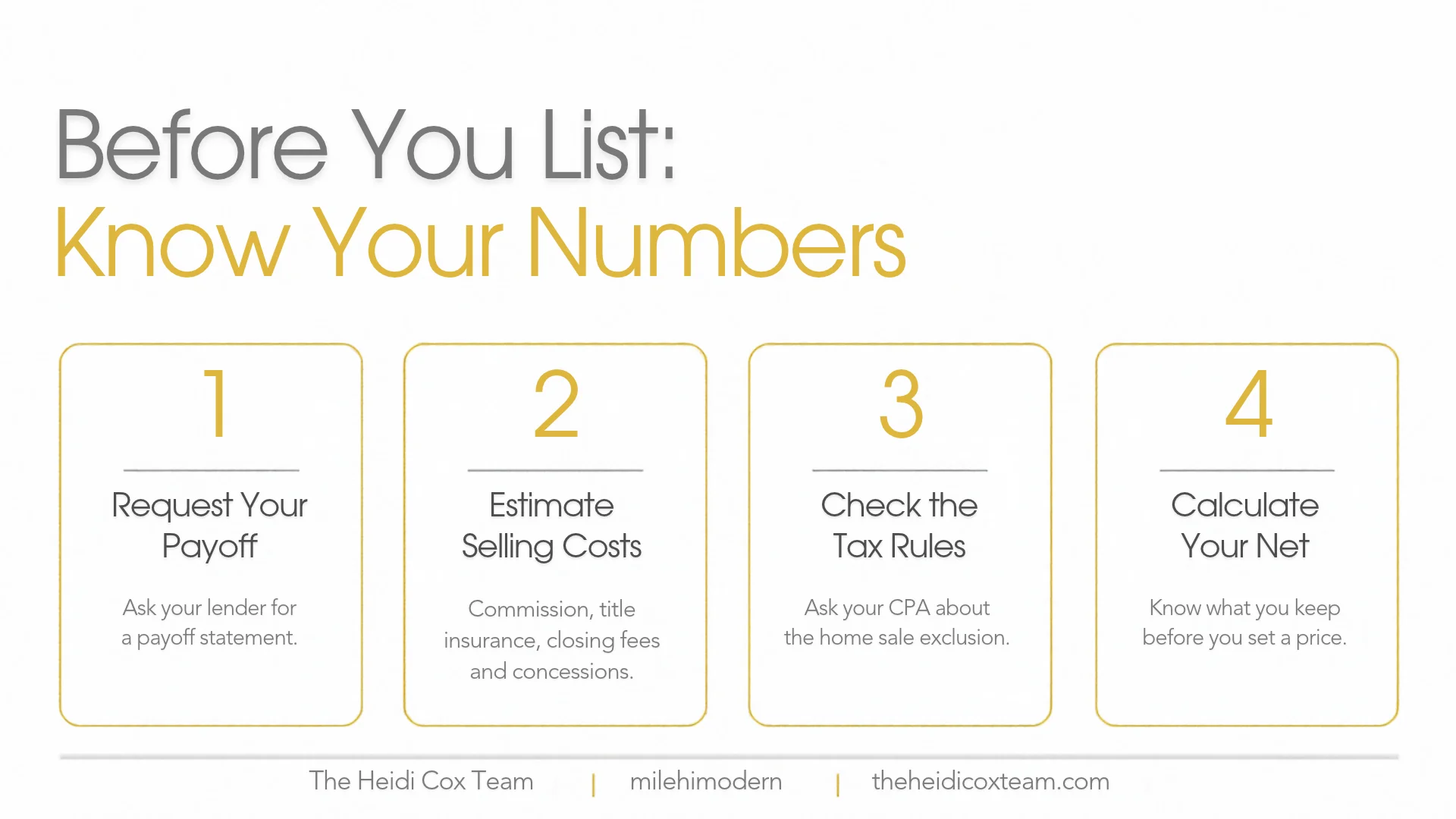
I never want a client making a significant financial decision without understanding the numbers behind it.
Sometimes the right decision is to sell immediately. Sometimes it's to spend a few months preparing. And sometimes, after looking at the numbers together, the right decision is not to sell at all.
My job is to help you make the right decision for your life, not simply to secure another listing.
Step 2: Pricing Your Denver Home Is Both an Art and a Science
An online home valuation cannot walk through your house.
It cannot appreciate the original millwork, the quality of a renovation, the way natural light moves through your living room or the experience of sitting on your front porch on a beautiful summer evening.
It also cannot fully understand why one block in South Park Hill might command a different price than another just a few streets away.
This is particularly important in Denver's historic neighborhoods, where no two homes are exactly alike.
When I price a home, I look beyond square footage and bedroom counts. I consider architectural significance, floor plan functionality, renovation quality, location, competing inventory and what buyers are responding to in the current market.
I also look at your competition through the eyes of a buyer.
If someone has $1.3 million to spend in Denver, what else can they buy? Why would they choose your home over those alternatives? And how do we make that decision easier for them?
That is where pricing becomes strategy.
I don't believe in telling sellers an inflated number simply to win their business. I believe in having an informed, transparent conversation about how we can position your home to achieve the strongest possible outcome.
For more on how I work with sellers, see our guide to Denver real estate services.
Step 3: Before You Renovate Anything, Call Me
One of the biggest mistakes I see homeowners make is spending money preparing their homes for sale before consulting a real estate professional.
Not every improvement translates into a higher sale price.
In fact, some of the most impactful changes are relatively simple.
I approach every listing with a design-forward perspective. I walk through your home and identify what we should emphasize, what we should improve and, just as importantly, what we should leave alone.
That might mean:
- Changing a light fixture that dates an otherwise beautiful room
- Repainting a space to complement its architecture
- Rearranging furniture to highlight the scale of a room
- Refinishing original hardwood floors rather than replacing them
- Simplifying landscaping to enhance curb appeal
- Removing window treatments that obstruct beautiful natural light
- Bringing in professional staging to help buyers understand how a space can function
With historic homes, I am particularly thoughtful about preserving character.
Original doors, architectural details, fireplaces, built-ins and vintage tile are often the very things that make a home special. I don't want to erase those features in an effort to make a home appeal to everyone.
I want to find the buyers who will appreciate them.
My goal is not to make your house look like every other house on the market. My goal is to make buyers remember yours.
Before investing in major remodels, review our guide on cost vs. value for Denver home upgrades. For room-by-room preparation, explore these practical Denver home staging tips and plan your staging investment using our Denver home staging costs guide.
Step 4: The First Listing Photo Matters More Than You Think

I talk about this often because I think it's one of the most overlooked parts of selling real estate.
Your first showing happens on someone's phone.
Before a buyer ever steps through your front door, they're scrolling through dozens of homes, making decisions in seconds about which properties deserve their time.
That first photograph needs to make them stop scrolling.
And it isn't necessarily a photograph of the exterior.
It might be an extraordinary kitchen, a beautifully proportioned living room, an architectural staircase or a view through French doors into a private garden.
I want the first image to communicate what is most compelling about your home.
From there, every photograph should contribute to the story.
Through my partnership with milehimodern, I approach real estate marketing with an editorial eye. Professional photography, thoughtful staging, lifestyle videography, floor plans and intentional digital marketing are all part of creating a compelling presentation.
I don't want buyers to simply understand what your house looks like.
I want them to imagine what their life could look like there.
Step 5: Sell the Lifestyle, Not Just the Square Footage
One of the reasons I love selling homes in Denver's historic neighborhoods is that the experience of living in them extends well beyond the property itself.
As a Park Hill resident, I understand this firsthand.
A home in Park Hill, Denver, might mean Saturday mornings at City Park, walking to a neighborhood coffee shop, riding your bike to Stanley Marketplace or spending summer evenings on your front porch.
A home in Congress Park might mean walking to dinner, enjoying the Denver Botanic Gardens or being minutes from Cherry Creek.
A home in Curtis Park might offer extraordinary historic architecture alongside some of Denver's most interesting restaurants, galleries and creative spaces.
These are things that don't translate through a standard list of property features.
When I market a home, I consider the architecture, the neighborhood and the everyday experiences that make living there meaningful.
Because buyers aren't simply purchasing four walls and a roof.
They're choosing where they want to build their lives.
Step 6: A Successful Launch Is Intentional
There is no second opportunity to introduce your home to the market for the first time.
That's why so much of my work happens before your listing ever goes live.
I want the pricing, presentation, photography, marketing materials and showing strategy to work together from day one.
My approach includes professional visual marketing, MLS exposure, social media storytelling, digital promotion and outreach within the Denver real estate brokerage community.
I also believe in actively communicating with other agents, understanding buyer feedback and monitoring how your home is performing against its competition.
Putting a sign in the yard and waiting for an offer is not a marketing strategy.
I want to create interest, communicate value and give qualified buyers compelling reasons to experience your home in person.
For more on what goes into a strong launch, see these proven tips for selling your home in Denver and these expert strategies for navigating a Denver home sale.
Step 7: The Highest Offer Isn't Always the Best Offer

Receiving an offer is exciting. But this is also where having an experienced negotiator matters tremendously.
A higher purchase price means very little if the buyer cannot perform, the appraisal creates complications or the inspection negotiations significantly reduce your proceeds.
When reviewing offers, I evaluate the entire picture:
- Purchase price and estimated net proceeds
- Strength of the buyer's financing
- Earnest money
- Inspection provisions
- Appraisal terms
- Requested concessions
- Closing timeline
- Possession and potential rent-back arrangements
I also consider how each offer aligns with your next move.
If you're purchasing another home, coordinating a relocation or navigating a significant life transition, the terms of your sale can be just as important as the price.
My responsibility is to help you understand the opportunities and risks within each offer, negotiate from an informed position and protect your interests throughout the transaction.
If you receive competitive offers, it also helps to understand how handling an appraisal gap in Denver protects your agreed sale price if the appraisal comes in below contract value.
Getting From Contract to Closing
In Colorado, once the contract is signed, a title company handles the title work and the closing.
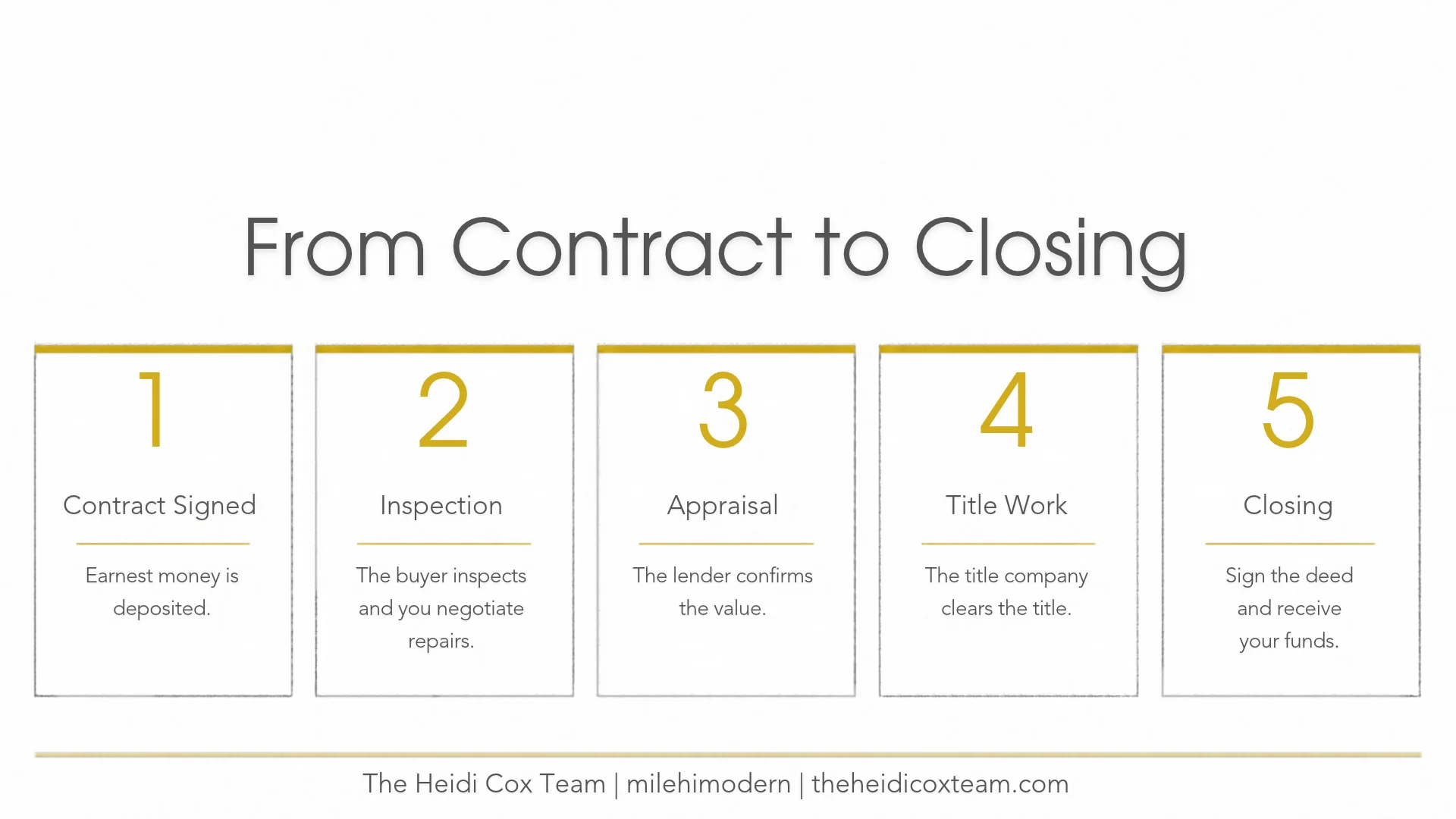
While you're under contract, which usually takes 30 to 45 days, the title company searches the title, clears any liens and issues the title commitment. Before closing, I review the settlement statement with you so you know your loan payoff, tax prorations, fees and net proceeds. At closing you sign the deed, ownership transfers and your funds are wired to you. Sellers don't have to close in person. For more detail, see our guide on the Denver home selling process and the Consumer Financial Protection Bureau's closing guidance.
Overcoming Obstacles and Unique Property Scenarios
Even a well-planned sale can stall. If your home has been on the market for a few weeks without showings or offers, it's almost always one of three things: price, presentation or condition.
A price adjustment, a staging refresh or fixing the repair buyers keep mentioning can bring interest back. For more, see these actionable tactics to sell a home fast in Denver.
How to Sell a House in Complex Situations (Tenants, Probate, or Chains)
Some sales take extra coordination:
- Tenant-Occupied Properties: Selling a rental home requires clear communication and adherence to local lease agreements. You must provide proper written notice before scheduling showings and navigate whether the home will be sold with existing tenants in place or delivered vacant at closing.
- Probate and Estate Sales: When selling a property on behalf of a deceased family member or through a Power of Attorney, ensure all personal representative letters and probate court authorizations are verified by your title company before listing.
- Buying and Selling Simultaneously: Managing a concurrent purchase and sale is a common scenario. Strategies such as short-term rent-back agreements, home sale contingencies, or bridge financing allow you to sell your existing property without feeling rushed into temporary housing.
- Historic Architecture: If you own a historic property in neighborhoods like Country Club, Baker, or Park Hill, consult our guide to selling historic homes in Denver for how to market the original details and work within preservation guidelines.
Frequently Asked Questions About Selling a Home
How long does it take to sell a house on average?
It depends on price, condition and the market. A well-priced home goes under contract much faster than one that is priced high. Once you accept an offer, closing typically takes another 30 to 45 days for the inspection, appraisal, underwriting and title work. You can see recent pacing in these historical patterns in Denver home sales.
What are the main costs associated with selling a house?
The main costs are brokerage commission, the owner's title insurance policy, closing fees, property tax prorations, any staging or repairs you do before listing and any concessions you negotiate with the buyer. Ask your agent for a net sheet so you can see the numbers before you list.
How can I protect myself from real estate and wire fraud?
Real estate transactions are frequent targets for sophisticated cyber fraud and phishing schemes. Always verify all wire transfer instructions directly with your title officer via a confirmed telephone number before sending funds. Never accept modified bank account details sent via unencrypted email, and avoid sharing real-time transaction updates or closing schedules on public social media accounts.
Conclusion
Selling a home is a big financial decision and a personal one. With the right price, good preparation, strong marketing and steady negotiation, it doesn't have to be stressful.

If you're thinking about selling and want to know what your home is worth, contact us today to get the process started.