
Denver Neighborhoods Where Parks Fit Family Life

For families looking for the best parks in family neighborhoods, Park Hill, Congress Park, Central Park, and Washington Park are strong places to start in Denver. Each offers a different mix of green space, playgrounds, and room to walk or play. The best fit depends on the route from a specific home, safe street crossings, your children’s ages, and your daily routine.
I'm Heidi Cox, a Denver REALTOR® with milehimodern. I live in Park Hill, and a lot of the families I work with tell me the park matters as much as the house. Here's what I'd look at.
Key Elements That Define the Best Parks in Family Neighborhoods
Being close to a park on a map isn't the same as being able to get there easily. What matters is whether you'll actually use it, and that comes down to the walk: the sidewalks, the shade and the streets you have to cross.
According to national family neighborhood benchmarks, the neighborhoods that rate highest pair park access with safe routes, good public infrastructure and places for people to gather. These are the things I'd look for in Denver:
- Pedestrian Connectivity: Wide sidewalks and bike routes that work for strollers, balance bikes and scooters.
- Tree Canopy and Shading: Mature trees that shade the walk on a hot Colorado afternoon.
- Proximity to Community Anchors: A library, rec center, coffee shop or school nearby.
- Active Neighborhood Associations: Neighbors who organize farmers markets, festivals and park cleanup days.
Essential Amenities in the Best Parks Family Neighborhoods
Playgrounds have changed a lot. Newer ones are designed to include kids of all physical and sensory abilities. Based on municipal park planning standards, the best neighborhood parks work for several age groups, use durable safety surfacing and separate activities into zones.
When you visit the parks near a home you're considering, these are worth looking for:
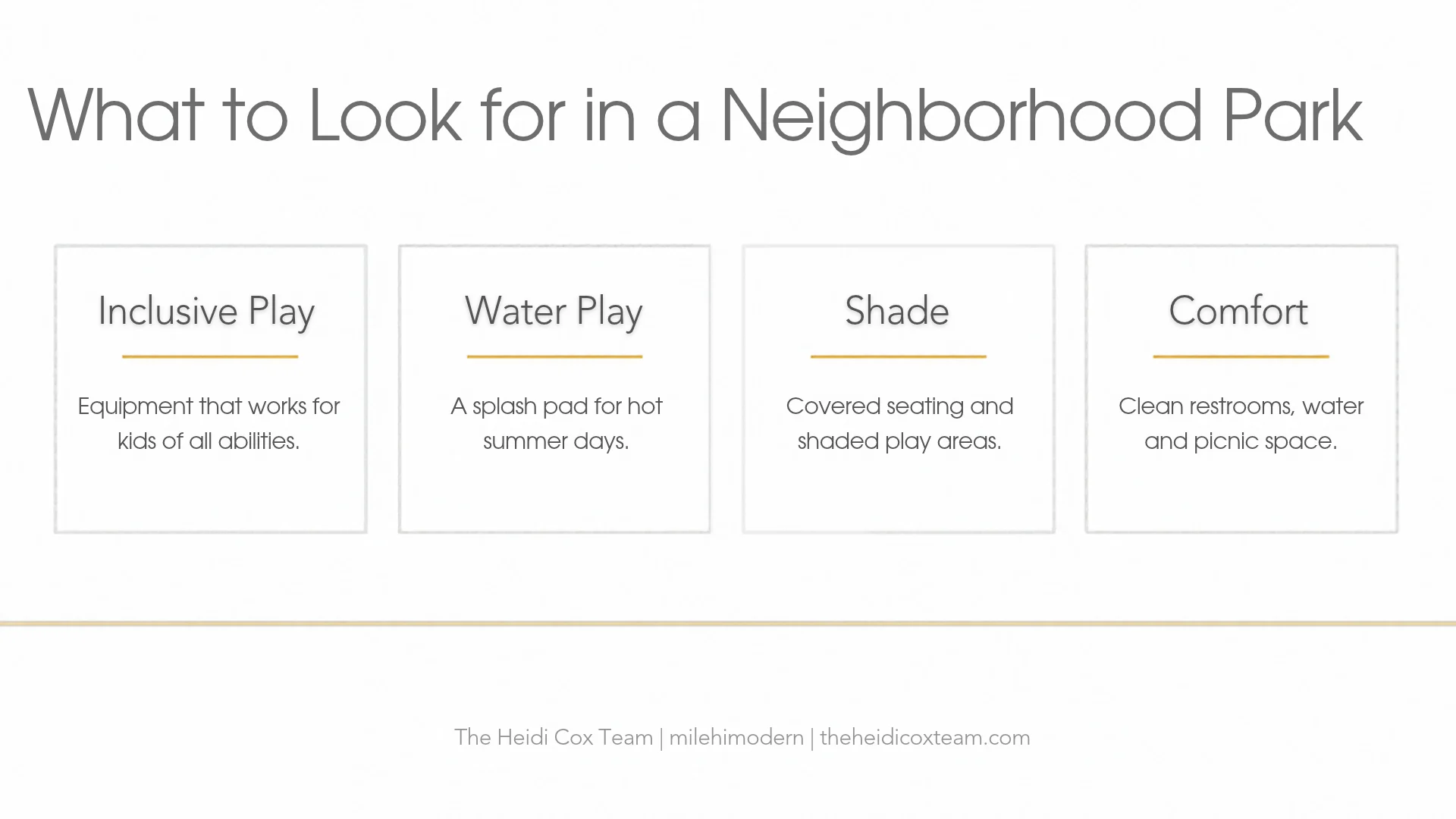
- Inclusive and All-Abilities Play Equipment: Poured-in-place rubber safety surfacing, wheelchair-accessible ramps, adaptive harness swings, and sensory musical installations that encourage cooperative play.
- Interactive Splash Pads and Water Features: Multi-jet, recirculating splash zones that provide refreshing outdoor play during warm summer days without requiring pool memberships.
- Engineered Shade Structures: Strategically placed shade sails and covered pavilions positioned over metal slides, swings, and parent seating areas to keep surfaces cool.
- Adventure and Agility Elements: Modern climbing pyramids, balance circuits, and dual ziplines (including disc and ADA-supported seats) designed to challenge older elementary children.
- Clean, Accessible Comfort Stations: Well-maintained public restrooms with diaper changing stations, water bottle refill points, and shaded picnic areas.
Safety, Walkability, and Urban Infrastructure
A park is only as useful as the route to it. Denver's older grid streets and landscaped parkways tend to slow traffic and give you clear sightlines, which matters a lot when you're walking with little kids.
When evaluating Denver neighborhood safety and community, I tell my buyers to walk from the house to the nearest playground, once in the morning and once in the late afternoon. Look for lighted crosswalks, pedestrian islands and anything that slows cars down near the school and the park.
Top Denver Communities for Park-Adjacent Family Living

Denver’s older neighborhoods were laid out around big public parks connected by tree-lined parkways. Whether you're relocating to Denver from out of state or moving across town for more room, a 2026 Denver neighborhood guide will help you compare the character, housing and parks in each area.
| Neighborhood | Primary Park | Acreage | Key Playground Features | Walkability & Character |
|---|---|---|---|---|
| Park Hill | City Park (adjacent) | \~330 Acres | Nature playgrounds, historic lakeside walks, Zoo & DMNS access | Highly walkable, historic tree-lined parkways, mid-century & Tudor brick homes |
| Congress Park | Congress Park | Neighborhood park | Playground, outdoor pool, tennis courts | High walkability, dense urban-suburban mix, proximity to Botanic Gardens |
| Curtis Park | Mestizo-Curtis Park | \~9 Acres | Creative play structures, outdoor community pool, basketball courts | Historic Victorian architecture, close to downtown |
| Washington Park | Washington Park | \~155 Acres | Dual playgrounds, boathouse, 2.6-mile perimeter loop, flower gardens | Very walkable, historic bungalows, sports fields |
| Central Park | Central Park & Greenway | \~80 Acres | Large playground, water play, connected trail network | Master-planned walkability, modern construction, pocket parks on every block |
Park Hill and City Park Access
Park Hill is known for its architecture, mature trees and wide parkways that are easy to walk and bike. It sits just east of the 330-acre City Park, so the Denver Zoo, the Denver Museum of Nature & Science and Ferril Lake are close by.
The homes range from Craftsman bungalows to brick Tudors. City Park's big lawns are where you'll find picnics, youth soccer and walks around the lake. Our Park Hill neighborhood character guide has more on what it's like to live here.
Congress Park and Botanic Gardens Proximity
Congress Park sits just south of Colfax and east of Cheesman Park. The neighborhood park has a playground, an outdoor pool and tennis courts.
You're also an easy walk from the Denver Botanic Gardens. The Congress Park family lifestyle is quiet, tree-lined blocks of brick Denver Squares and bungalows, with bakeries and restaurants you can walk to.
Curtis Park and Historic Downtown Playgrounds
Curtis Park is Denver's oldest residential neighborhood, and it's full of preserved 19th-century Victorian homes. Mestizo-Curtis Park sits in the middle of it and has anchored the neighborhood since the late 1860s.
The park has children's play areas, athletic fields, basketball courts and an outdoor pool. If you want to be close to downtown, our Curtis Park neighborhood guide and overview of first-time buyer options near downtown cover the homes, the parks and the transit access.
Washington Park and Central Park Enclaves
If you want a lot of park, Washington Park and Central Park are two of Denver's most popular choices. Washington Park has two lakes, formal flower gardens and a 2.6-mile outer loop for running and biking.
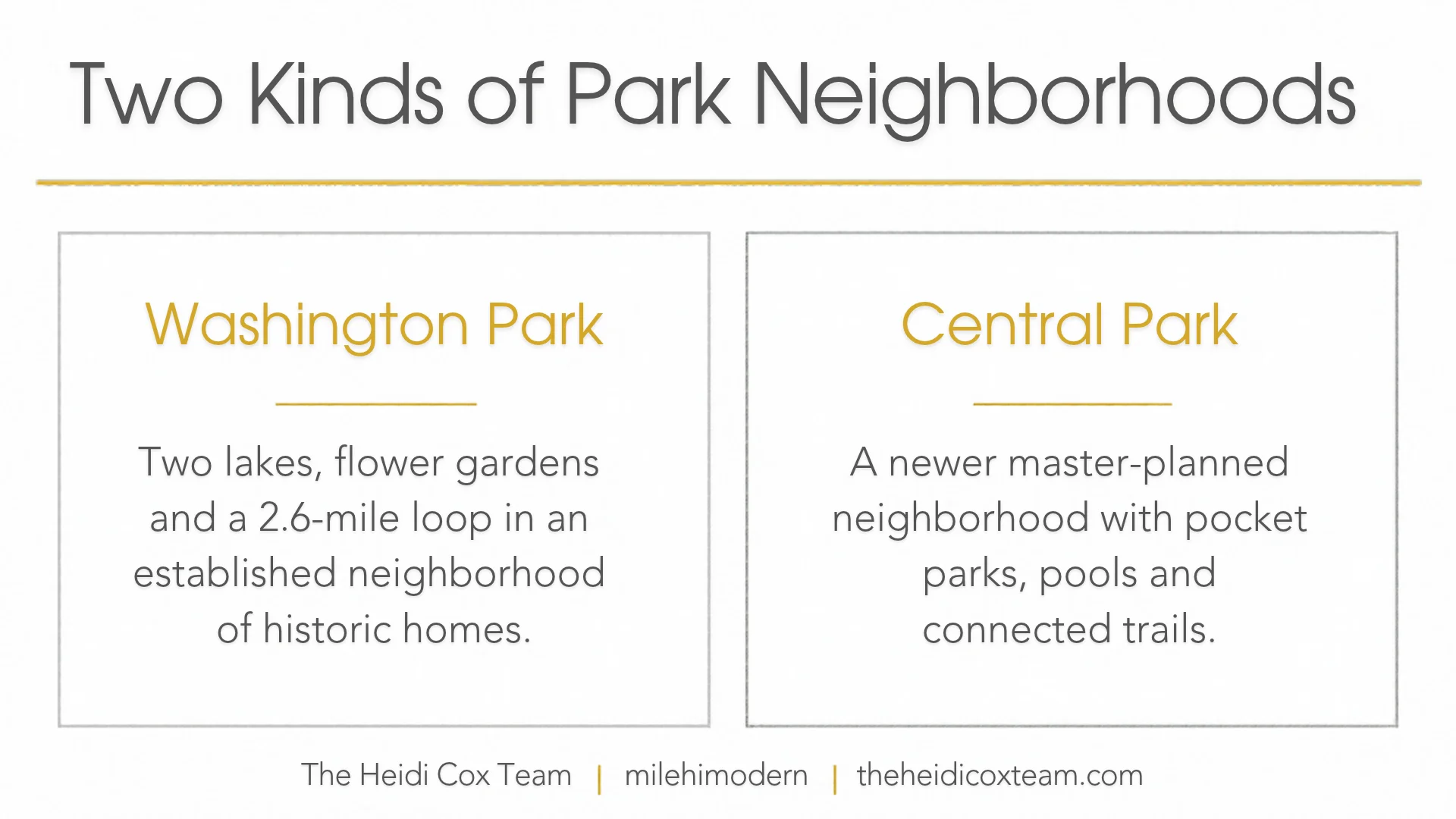
Farther east, Central Park is the newer, master-planned option. Its central green space is about 80 acres, and the neighborhood is known for pocket parks, pools and bike paths that connect to regional trails.
Both rank consistently among premier family communities in Denver for their ability to balance open green spaces with convenient connections to regional Colorado public trail networks.
Balancing Park Amenities Across Different Childhood Stages
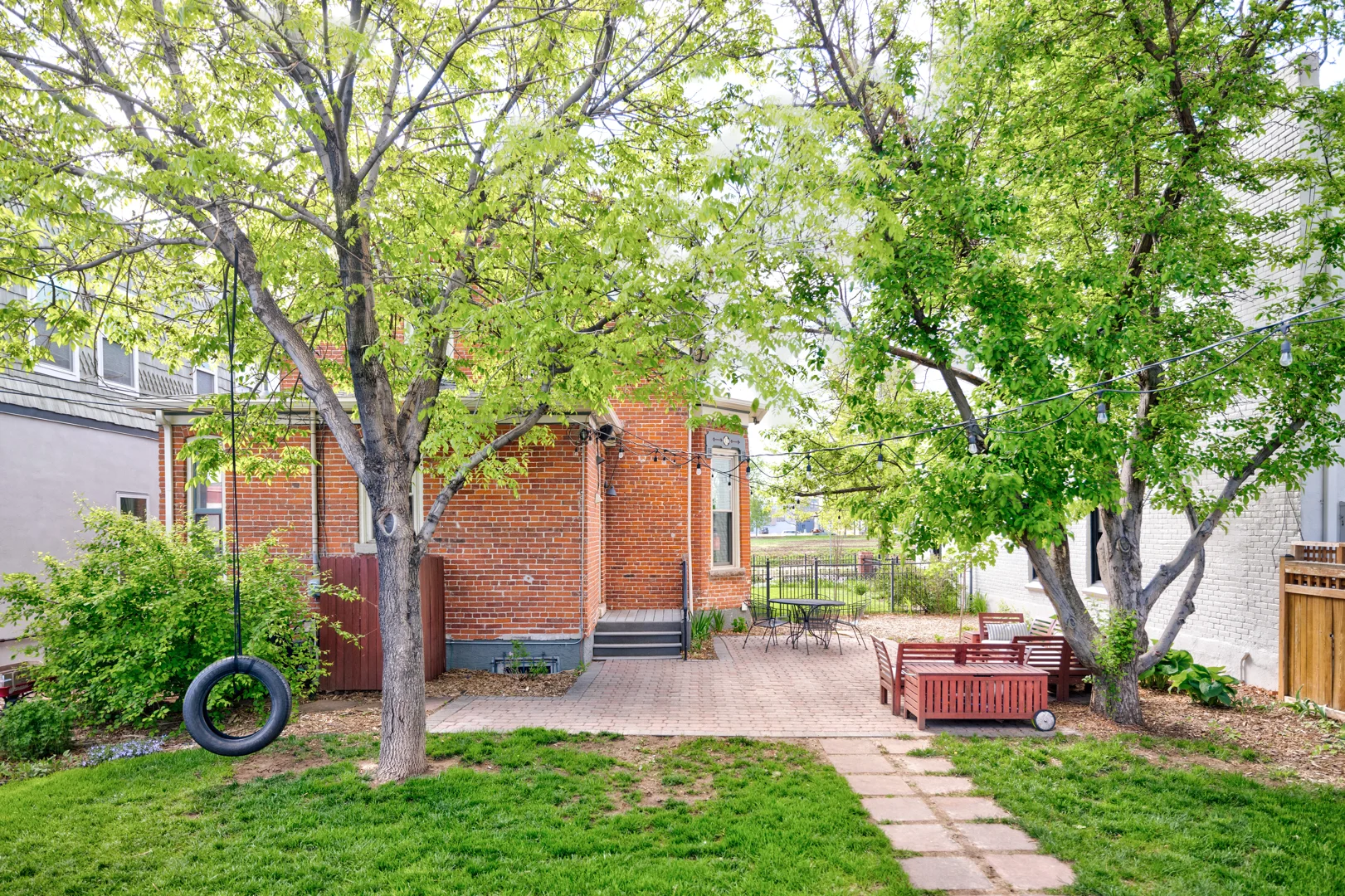
A neighborhood park that feels perfect for an infant in a stroller may no longer meet your family's needs when your children reach middle school. I'd think about what you need now and what you'll want when the kids are older and more independent.
When choosing the right Denver family home, think about how the nearby parks will work for your kids over the next five to ten years.
Matching Age Milestones to the Best Parks Family Neighborhoods
- Early Walkers & Toddlers (Ages 0–3): For early walkers, large destination playgrounds can be overwhelming. Look for neighborhood pocket parks featuring fully enclosed tot lots, smooth poured-in-place rubber flooring (which prevents scraped knees and avoids woodchip choking hazards), low-profile slides, and bucket swings.
- Young Elementary (Ages 4–8): Children in this stage thrive on imaginative and sensory play. Key features include themed playsets, balance logs, accessible net structures, wide open grass for tag, and interactive splash pads for summer afternoons.
- Older Kids & Pre-Teens (Ages 9–13): As children gain independence, they look for challenge and open socialization. Parks equipped with high-climbing rope pyramids, dual ziplines, basketball courts, pump tracks, and open turf for pickup soccer or football keep older children engaged close to home.
Urban vs. Suburban Park Trade-Offs for Homebuyers
Every home purchase is a trade-off between the size of the house, the yard and what's nearby. Denver's close-in neighborhoods usually have smaller yards, but a big historic park is often around the corner.
The suburbs often give you a larger lot and newer playgrounds, but you'll probably drive more. As you navigate Denver home choices, decide whether you'd rather walk to things every day or have a bigger private yard.
Frequently Asked Questions About Denver Park Living
Which Denver neighborhoods offer the most walkable park access for young children?
Park Hill, Congress Park and Central Park are where I'd start. Park Hill and Congress Park have continuous sidewalks, mature trees and quieter interior streets leading to the parks. Central Park was planned with pocket parks and playgrounds within a few blocks of most homes.
How does park proximity impact residential property value in Denver?
In my experience, homes within a short walk of a well-kept park tend to hold their value well and stay in demand. In Denver's close-in neighborhoods, buyers treat the park as an extension of the yard.
What winter amenities do Denver family parks offer?
Denver gets a lot of sunny winter days, so the parks stay busy year-round. The larger parks have hills that kids sled on after a snowstorm, the paved loops are good for stroller walks, and Denver Parks and Recreation centers have indoor gyms, pools and programs through the colder months.
Conclusion
I think the right neighborhood is the one where getting outside is easy and your kids can grow into it. If parks are high on your list, I'm happy to walk you through Park Hill and the other neighborhoods around Denver's historic parks, and talk through value, schools and walkability for the specific homes you're considering.
When you're ready, begin exploring Denver homes with park access and reach out. I'd love to help.